Key takeaways
- Consumer TVs are built for a few hours of home viewing, not long daily use in a busy restaurant.
- Common problems include low brightness, fading colours, image retention, heat damage and warranty issues.
- Commercial displays are designed for long operating hours, higher brightness and portrait or landscape installation.
- A cheaper TV often costs more over time through replacements and a poorer customer experience.
Digital menu boards shape how customers see your food, how quickly they order and how they judge your brand. One of the most common mistakes restaurants and cafés make is using ordinary home TVs as menu boards.
They look fine on day one. The problems appear later.
Why Consumer TVs Struggle as Digital Menu Boards
Home TVs are designed for a few hours of viewing a day in a living room. A restaurant menu board may run 12 hours or more every day, close to kitchen heat, in a bright space. That is a very different job.
1. Brightness drops and menus become hard to read
Home TVs have modest brightness. Near windows, under spotlights or in a sunny shopfront, the menu can look washed out, and brightness can fall further with long daily use.
2. Colours fade and food looks less appealing
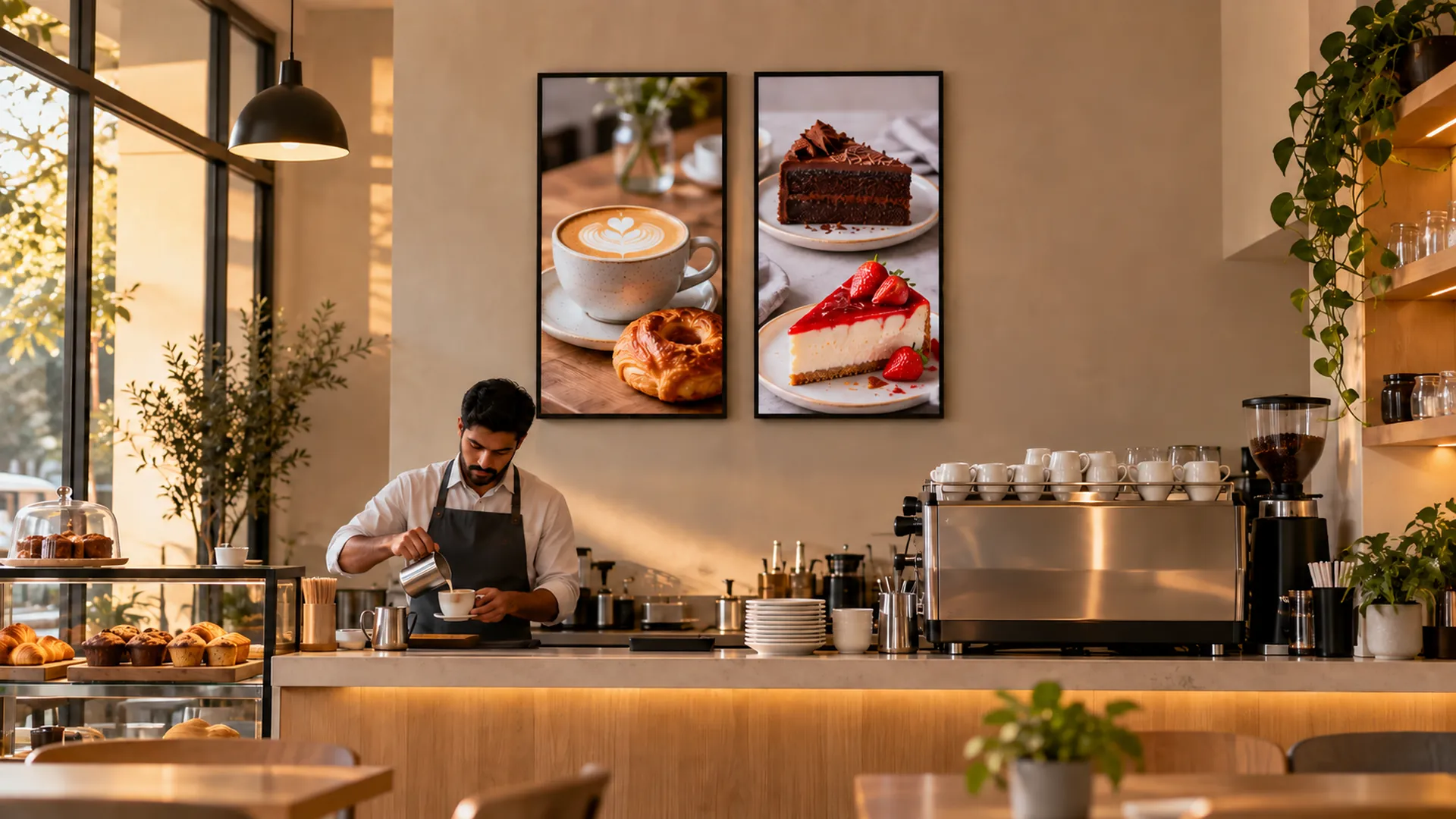
Food photography depends on rich, accurate colour. As a consumer panel ages under constant use, images can lose their appeal, and that directly affects what customers order.
3. Image retention from static menus
Menu boards often show the same layout, logo and prices for hours. Displays not designed for static content can show faint “ghost” images of the menu over time.
4. Portrait installation problems
Many restaurants want vertical menu screens. Most home TVs are not designed to be mounted in portrait orientation, which can affect cooling and reliability.
5. Heat, grease and dust
Screens near kitchens and counters face heat, grease and dust, especially in Pakistan’s summers. Consumer TVs are not built for these conditions.
6. Warranty issues
Many consumer TV warranties do not cover commercial use or long daily operating hours. Check the warranty terms before relying on a home TV for business use.
The result: what looked cheaper at purchase often leads to repeated repairs or replacements, and a menu that does not show your food at its best.
Consumer TV vs Commercial Display
| Factor | Consumer TV | Commercial display |
|---|---|---|
| Daily operation | Designed for home viewing hours | Designed for long daily or continuous operation |
| Brightness | Suited to living rooms | Higher-brightness options for shopfronts and bright spaces |
| Orientation | Usually landscape only | Portrait and landscape supported |
| Static content | Risk of image retention | Features to reduce image retention |
| Content updates | USB stick or manual changes | Remote updates and scheduling through a CMS |
| Warranty | Often excludes commercial use | Commercial-use warranty |
Why Commercial Displays Are the Right Choice
Commercial displays are designed for restaurants, cafés, food courts and quick-service outlets. Key advantages include:
- Built for long operating hours: designed to run all day without the stress that shortens a home TV’s life.
- Higher brightness options: menus stay readable near windows, under spotlights and in bright shopfronts.
- Portrait and landscape: suitable for vertical menu screens as well as wide menu walls.
- Features for static content: designed to reduce image retention from menus that stay on screen for hours.
- Remote content management: with a CMS, you can change prices, schedule breakfast and dinner menus and update every branch from one place.
- Commercial warranty and support: cover that matches how the screen is actually used.
Checklist Before You Buy a Menu Board Screen
- How many hours a day will the screen run?
- Is the location bright, near a window, or close to the kitchen?
- Will the screen be mounted in portrait or landscape?
- How will you update prices and menus: by USB, or remotely through a CMS?
- Does the warranty cover commercial use?
- Who will install and support the screens in your city?
Your Menu Board Is Your Brand’s First Impression
A clear, bright and attractive digital menu helps customers:
- See food options easily
- Order faster
- Trust your brand
- Notice promoted items and combos
At DIGIX, we often say: your menu board is the first interaction customers have with your food, so don’t compromise it. A commercial display is not a luxury. It is an essential investment for any restaurant or café.
DIGIX supplies and installs commercial menu board displays and CMS for restaurants across Lahore, Karachi, Islamabad, Gujranwala, Faisalabad, Multan and Rahim Yar Khan. For ideas on what to show on your screens, read the digital menu screen trends restaurants are using in 2026.
Frequently Asked Questions
Can I use a normal TV as a digital menu board?
It can work for a short time, but home TVs are not designed for long daily operation, bright spaces or static content. A commercial display is more reliable for a restaurant.
Why are commercial displays more expensive?
They are built for long operating hours, often offer higher brightness and portrait mounting, and come with commercial warranties. Over several years, they usually cost less than repeatedly replacing home TVs.
Can commercial menu boards be updated remotely?
Yes. With a media player and CMS, you can update prices, schedule menus by time of day and manage screens in several branches.
Do I need portrait or landscape screens?
It depends on your counter and menu layout. Portrait screens suit narrow walls and combo highlights; landscape screens suit wide menus above a counter.