
Key takeaways
- SMD stands for Surface Mounted Device. In an LED screen it means the red, green and blue LEDs are packed into one tiny component that is soldered onto the circuit board.
- Almost every modern LED video screen sold in Pakistan, indoors and outdoors, is an SMD screen.
- The number that matters most is pixel pitch (P2.5, P4, P10 and so on): the smaller it is, the sharper the picture and the closer people can stand.
- Indoor and outdoor SMD screens are built differently. Never use an indoor screen outside.
“SMD screen” is the name most people in Pakistan use for any large LED video screen: the ones on malls, shops, roads, stages and showrooms. This guide explains in plain language what the name means, how these screens work and how to pick the right one for your space.
1. What is an SMD screen?
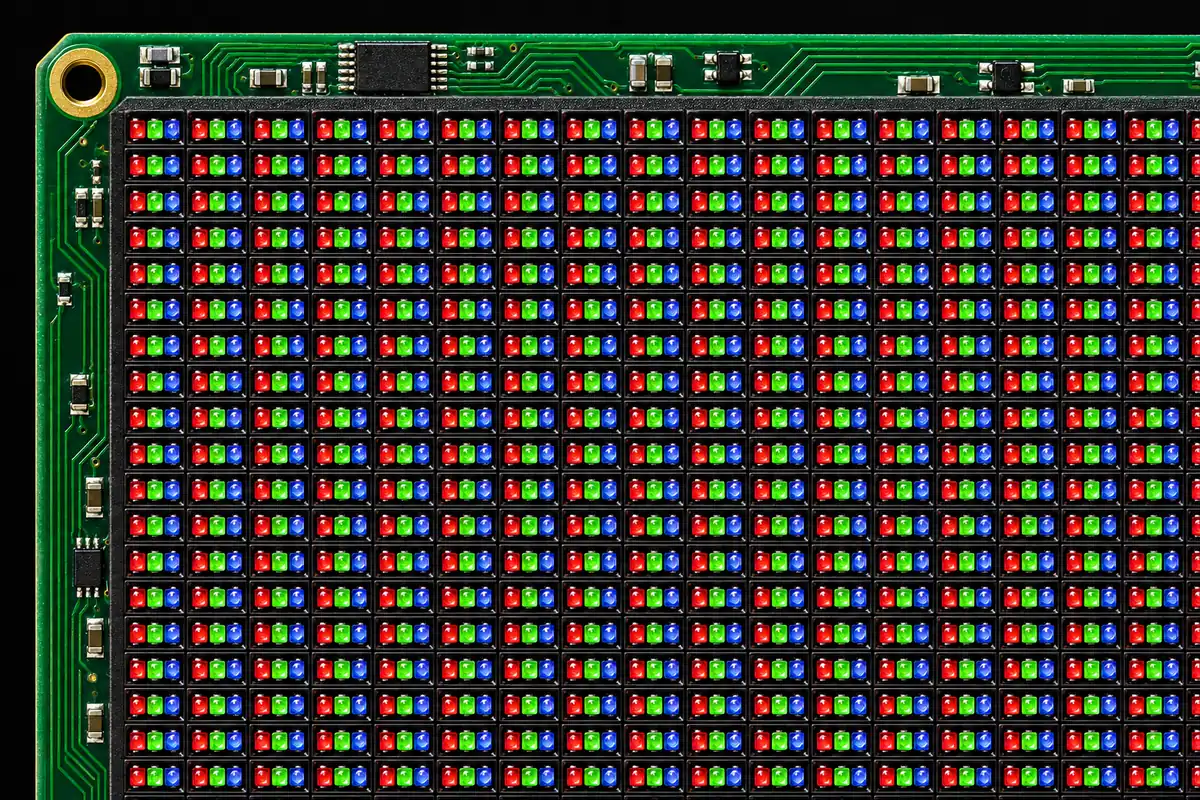
SMD stands for Surface Mounted Device. It describes how the lights in the screen are made. Each tiny light, called a pixel, contains three LEDs: one red, one green and one blue. In an SMD screen those three LEDs are packed together in a single small component. A machine solders that component onto the surface of a circuit board, which is where the name comes from.
Many of these boards are joined together into modules, and modules are fitted into cabinets. The cabinets are then assembled into a screen of any size you need, from a small counter display to a full building wall.
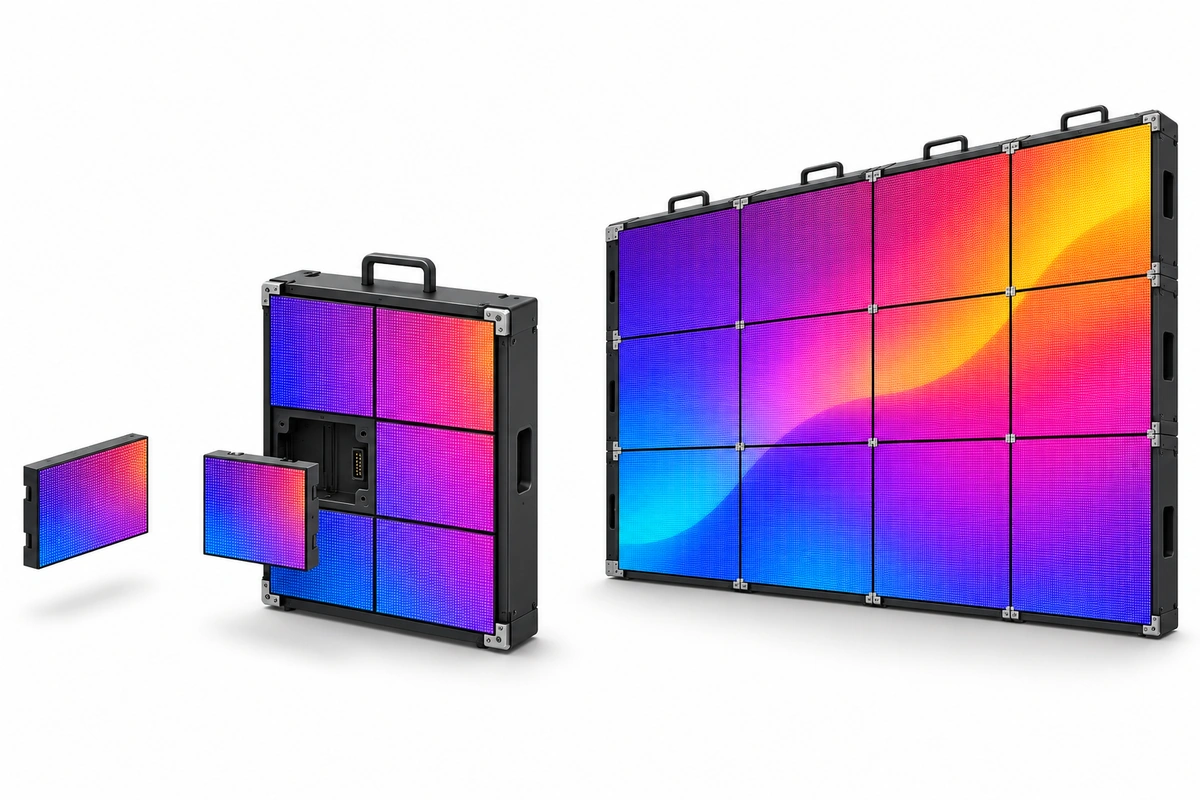
2. How an SMD screen works
- Every pixel is made of red, green and blue light. By changing how bright each one is, the screen can show millions of colours.
- A control system (a sending card and a receiving card) tells each pixel what to show, many times every second.
- A media player or computer sends your video, images or live content to the controller. This is the same content that a signage system or CMS player can schedule for you.
- A power supply gives the modules steady power, and a cooling design keeps them from overheating.
3. Pixel pitch: the number that decides sharpness
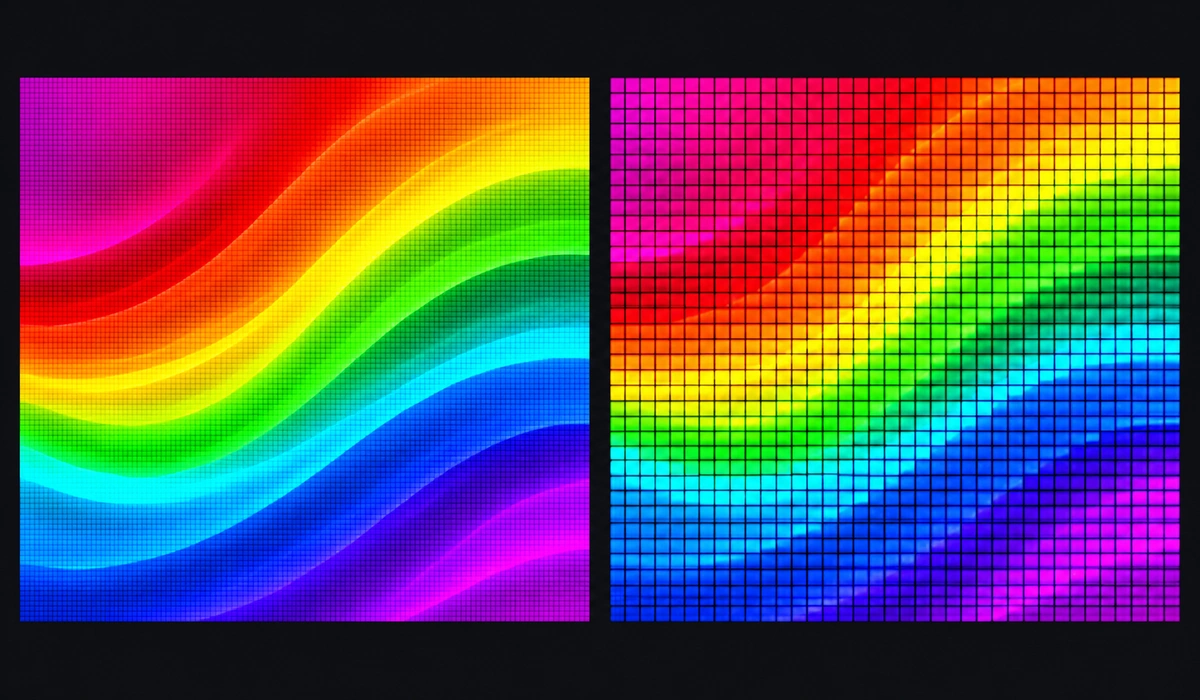
You will see codes like P2.5, P3, P4 or P10. The number is the pixel pitch: the distance in millimetres from the centre of one pixel to the centre of the next.
- Smaller number (for example P1.5 to P3): pixels are closer together, so the picture is sharper. These are used where people stand close, such as shops, meeting rooms and reception areas.
- Bigger number (for example P6 to P10): pixels are further apart. They look sharp from far away and cost less per square foot, so they suit roadside and building screens.
A simple rule of thumb: the pixel pitch in millimetres is roughly the closest comfortable viewing distance in metres. A P3 screen looks good from about 3 metres away, and a P10 screen from about 10 metres. You can try different sizes and pitches with our free pixel pitch calculator.
4. Indoor vs outdoor SMD screens
| Indoor SMD | Outdoor SMD | |
|---|---|---|
| Brightness | Lower, so it is comfortable to look at in a room | Much higher, so it stays clear in direct sunlight |
| Protection | Not weatherproof | Sealed against rain, dust and heat |
| Typical pixel pitch | Smaller (sharper) | Larger (viewed from further away) |
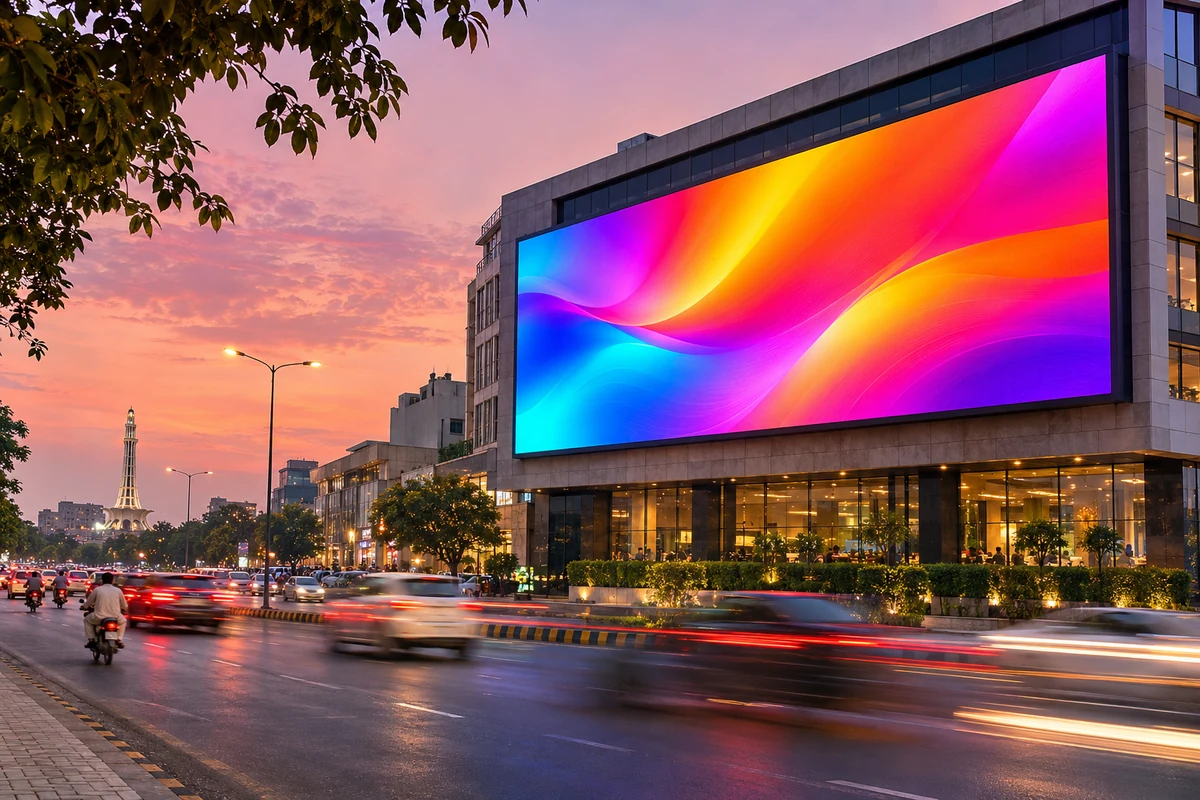
| Best for | Shops, malls, offices, studios, events | Building fronts, roads, petrol stations, billboards |
See the full ranges in our indoor SMD screens and outdoor SMD screens guides.
5. Why businesses choose SMD
- Any size and shape: modules fit together like building blocks, so the screen can match your wall.
- Bright, clear colour that stays readable in malls and in daylight.
- Content you can change instantly: update an offer or a campaign in minutes instead of reprinting a billboard.
- Wide viewing angle, so people can see it from the side as well as from the front.
- Long life: LED screens are commonly rated for tens of thousands of hours of use, which is many years of daily running.
- Easy repair: if one module fails you replace that module, not the whole screen.
There are also other LED build types, such as GOB and COB, that add extra protection or finer detail. Our SMD vs GOB vs COB vs LOB guide compares them side by side.
6. Where SMD screens are used
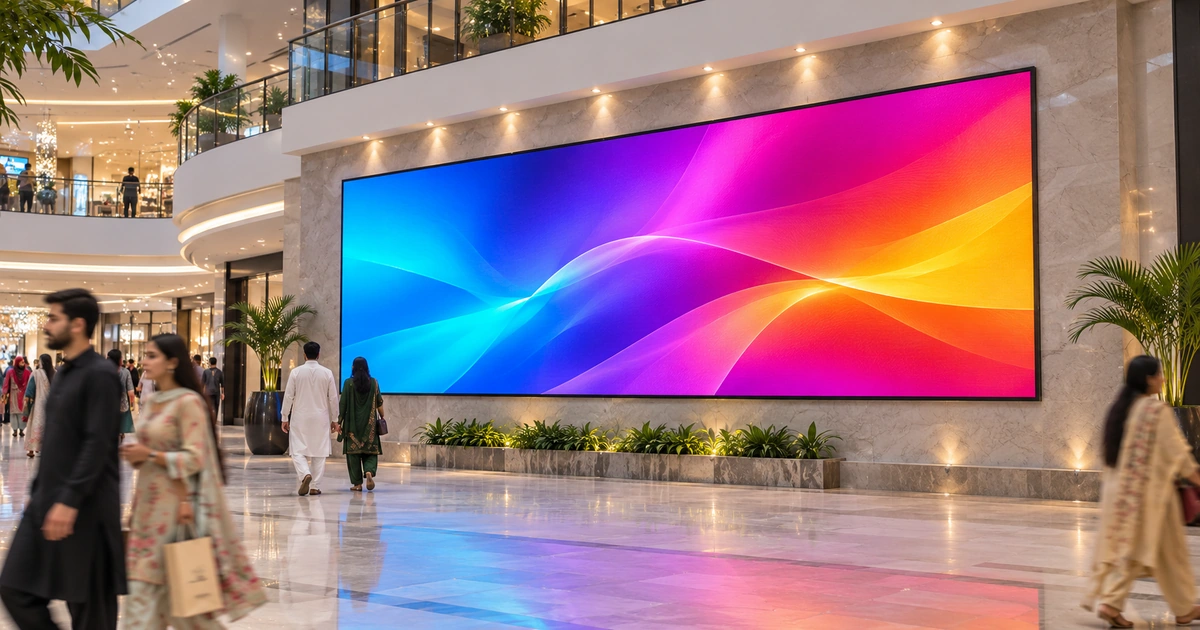
- Retail shops and shopping malls (storefronts, atriums, brand walls)
- Restaurants and food courts (menu and promotion screens)
- Petrol stations, banks and corporate offices
- Roadside and rooftop advertising
- Weddings, concerts, exhibitions and corporate events
- Control rooms and training rooms
You can see real examples in our project gallery.
7. How to choose the right SMD screen
- Where will it go? Indoors or outdoors decides the type.
- How close will people stand? This decides the pixel pitch.
- How big is the wall? Measure the width and height. Screens are built from standard cabinet sizes, so the final size is fitted to these.
- What will you show? Videos, offers, live feeds? This decides the control system and software.
- Who will install and support it? Ask about site survey, power, structure and after-sales support before you buy.
Not sure? Our SMD screen price calculator and the SMD screen price in Pakistan guide help you plan your budget, and the 3D configurator shows how a screen will look in a real space.
8. Frequently Asked Questions
What does SMD stand for?
SMD stands for Surface Mounted Device. In LED screens it means the red, green and blue LEDs are packed into one tiny component and soldered onto the surface of a circuit board.
Is an SMD screen the same as an LED screen?
Almost. “LED screen” is the general term. Most LED screens sold today use SMD technology, which is why people in Pakistan use “SMD screen” for any large LED video screen.
What is the difference between an SMD screen and an LED TV?
An LED TV is a single fixed-size panel for viewing at home or in a small room. An SMD screen is built from modules, so it can be made as large as you need and as bright as a public space requires.
What does P2.5 or P10 mean on an SMD screen?
It is the pixel pitch in millimetres, the distance between two pixels. P2.5 means 2.5 mm. A smaller number gives a sharper picture and suits close viewing.
Can I use an indoor SMD screen outside?
No. Indoor screens are not weatherproof and are not bright enough for sunlight. Outdoor use needs an outdoor SMD screen.
How long does an SMD screen last?
LED screens are commonly rated for tens of thousands of hours. Real life depends on brightness settings, heat, dust and how well the screen is installed and maintained.
Does DIGIX supply and install SMD screens?
Yes. DIGIX supplies and installs indoor and outdoor SMD screens across Pakistan, with offices in Lahore, Karachi and Islamabad, and our team has worked with LED screens since 2007.
Get the right screen for your space
Tell us where the screen will go, its size and how close people will stand. Our team will recommend the right screen and send an itemised quotation.