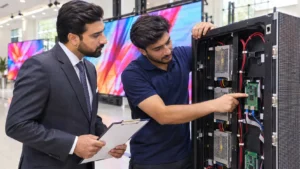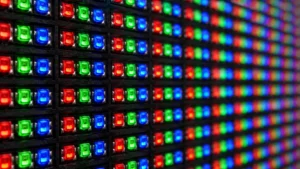
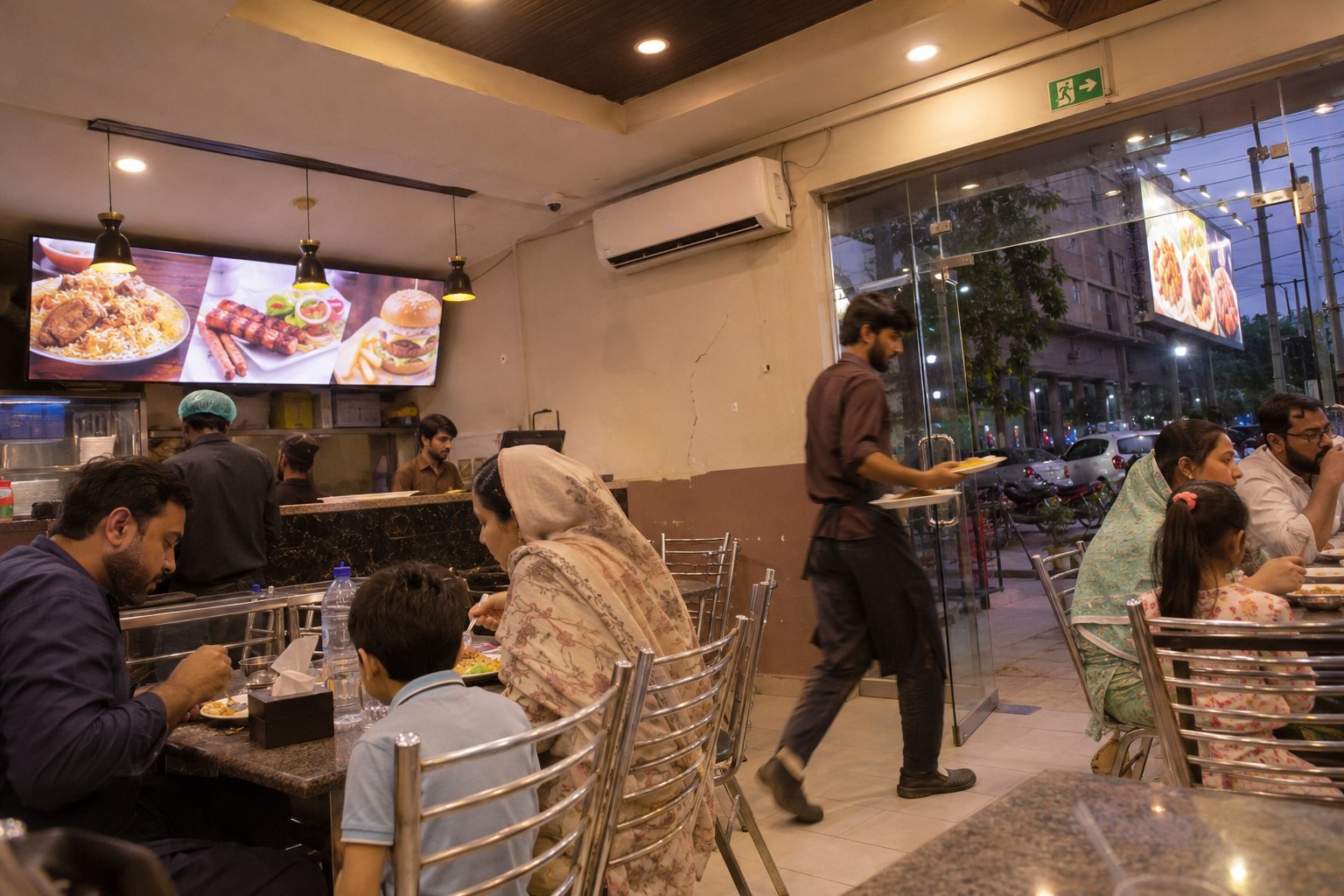
Choose an indoor SMD screen if it sits inside your dining area, and an outdoor SMD screen if it faces the street, a car park or open seating in daylight. Indoor screens cost more per sq ft at fine pitches, but outdoor screens need higher brightness and weather protection, so never swap one for the other.
Quick comparison: indoor vs outdoor for a restaurant
| Point | Indoor SMD screen | Outdoor SMD screen |
|---|---|---|
| Best place | Dining hall, menu wall, counter, waiting area | Street-facing fascia, drive-through, open-air seating, rooftop |
| Typical pixel pitch | P2, P2.5, P3 | P4, P5 (close viewing), P8 (far viewing) |
| Brightness | Moderate, set to suit the room | High, to stay readable in daylight |
| Weather protection | Not designed for rain, dust or direct sun | Built for rain, dust and heat |
| DIGIX price (screen only, before GST, per sq ft) | P2: Rs 25,000-40,000 P2.5: Rs 17,000-27,000 P3: Rs 16,500-26,500 |
P4: Rs 19,000-30,500 P5: Rs 15,000-24,000 P8: Rs 12,000-19,000 |
These prices cover the screen only. Structure, wiring, controller, installation and GST are extra. See the full range in our SMD screen price in Pakistan guide, or use the SMD screen price calculator.
Start with where the screen will be
The environment decides the type before budget does. Indoor screens are made for controlled rooms. They are tuned for sharp text and comfortable brightness at close range. Outdoor screens use brighter LEDs and sealed cabinets so they survive rain, dust and Pakistan’s summer heat.
Using an indoor screen outdoors risks water damage and an unreadable picture in sunlight. Using an outdoor screen inside a dining room is usually a waste of money, and it can be too bright for diners.
When an indoor screen is the right choice
- Digital menu boards: guests read prices and item names from a few metres away, so a fine pitch such as P2.5 or P3 keeps text clean.
- Promotions and brand videos: screens near the counter or entrance lobby can run offers by time of day.
- Match nights: a large indoor wall stays bright and colourful in a lit room. Check the rights first: commercial screening usually requires permission or a licence from the broadcaster or rights holder.
Not sure which pitch suits your room? Use the pixel pitch calculator with your viewing distance.
When an outdoor screen is the right choice
- Street-facing fascia: it must compete with daylight and be seen from the road or pavement.
- Drive-through or car-park menu: viewers are close, so choose a finer outdoor pitch such as P4 or P5.
- Outdoor seating and rooftops: sun, dust and rain reach the screen, so it needs outdoor-rated protection.
For roadside viewing from a distance, a coarser pitch such as P8 costs less per sq ft. It looks blocky up close, so match the pitch to how near people stand.
The grey area: screens behind glass
Many restaurants want a screen just inside the front window. Sunlight through glass can wash out a standard indoor screen, and there is no single rule that fits every window. Send us a photo of the spot and tell us what time of day it gets sun, and we will advise on the right specification.
Costs people forget
- Steel structure or wall mounting, and electrical work.
- The controller, media player and any CMS licence. Ask whether there are recurring charges.
- Power use. Brighter outdoor screens generally draw more power, so check the figures on the specification sheet and have a qualified electrician plan the supply.
- Cleaning and servicing, which matters more for outdoor screens in dusty locations.
To see a screen on your wall before you decide, try the 3D configurator, or look at installed work in our gallery.
How to decide in four steps
- Mark where the screen will go and whether sunlight or rain reaches it.
- Measure the distance from the screen to the nearest and farthest viewer.
- Pick the pixel pitch from that distance, then the size from the wall space.
- Request a quotation that lists screen, structure, controller, installation and GST separately.
Frequently asked questions
Can I use an indoor screen under a covered outdoor seating area?
Usually not. Dust, humidity and heat can still reach it, and daylight can overpower it. Send us photos of the area and we will advise on the right type.
Which is cheaper per sq ft, indoor or outdoor?
It depends on pixel pitch. For example, DIGIX indoor P3 is Rs 16,500-26,500 per sq ft, while outdoor P4 is Rs 19,000-30,500, both screen-only and before GST.
What pixel pitch is best for a restaurant menu board?
For indoor menus viewed from a few metres, P2.5 or P3 is a common choice. Use the pixel pitch calculator with your actual viewing distance to confirm.
Can I show cricket matches on my restaurant screen?
The screen can display them, but public screening usually needs permission from the rights holder. Check this before you promote match nights.
Ready to choose? Message DIGIX | Adsells on WhatsApp with photos of your restaurant and the wall size, and we will suggest the right screen.